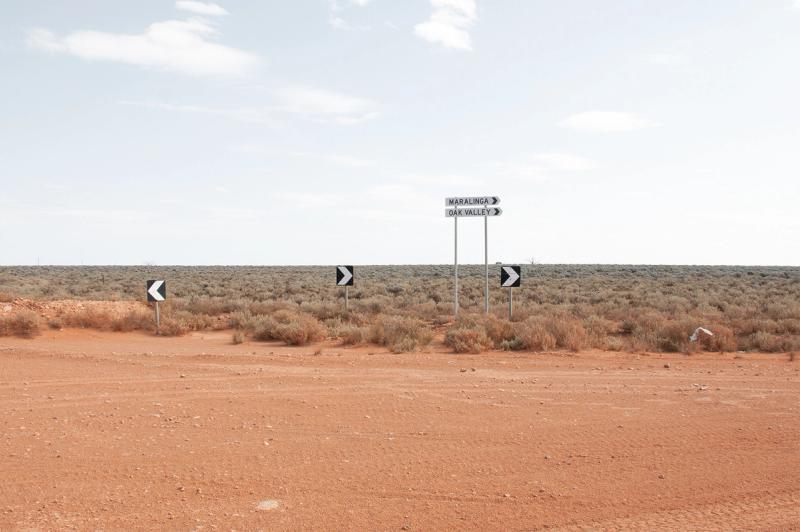
Nuclear colonialism in Maralinga, David Burns
Nuclear colonialism in Maralinga: Efforts to transfer contaminated land to its traditional owners ring hollow in the Australian desert, writes David Burns. David Burns.
Nuclear colonialism is a uniquely 20th-century form of imperialism. It destroyed countless lives and cultures, permanently displaced people and traditions, and launched an endless desire for the development and testing of weapons with ever-increasing destructive capabilities. Its most lasting consequences, however, persist in the DNA and lands of its Indigenous victims. In the decades since the first nuclear detonation in 1945, Indigenous peoples around the world have been disproportionately affected by the intergenerational trauma of the atomic blasts – their lands repeatedly colonised, irradiated and abandoned. As remediation and repatriation of nuclear landscapes increase, an important question emerges: is a land poisoned by atomic blasts still the land it once was?
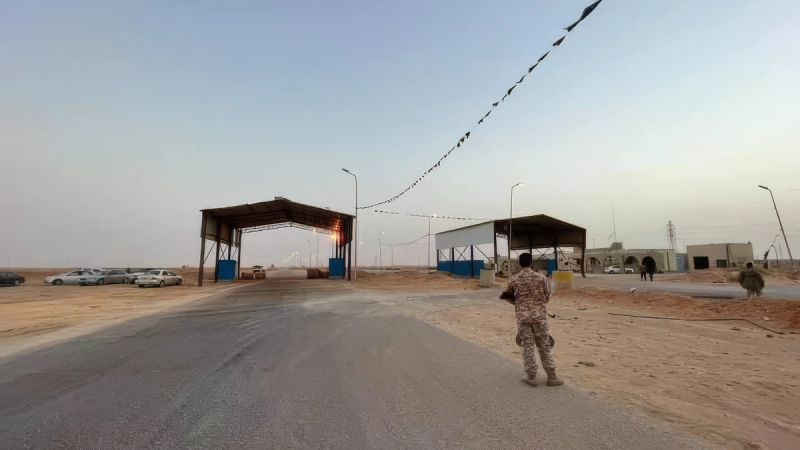
On 5 November 2014, in front of a drab aluminium building adjacent to an aging airstrip in a remote corner of western South Australia, an acute nuclear colonial moment took place under the guise of Indigenous land rights recognition. Then Minister of Defence David Johnston and Minister for Indigenous Affairs Nigel Scullion presented a framed map to an expressionless Keith Peters, a Maralinga Tjarutja elder. The map, framed in pale wood with a brass title plate, was of the Woomera Prohibited Area (WPA) – 127,000km2 of restricted weapons testing ranges, roughly equivalent to the landmass of England. On the left side of the map, just above the labelling for the Nullarbor Plain and the Trans-Australian Railway, situated at the southwest corner of the dashed and dotted line demarcating the boundary of the WPA, a small red rectangle defined a cryptically named piece of land: Section 400. It is a place voided by countless other colonial maps: a place stripped of tens of thousands of years of Indigenous history and inhabitation, now conspicuously returned in an act called an ‘excision’. This thin red line also signifies one of the most contaminated places in Australia.
An excision suggests a surgery or a careful and deliberate removal; it implies a potential danger, as in the excision of a tumour. But here, at what was officially branded the Section 400 Excision Event, the word referred to the transfer of a semi-sovereign prohibited area ceded by the Australian government to the British in 1947 after being dispossessed from the original Aboriginal custodians by the newly federalised government of Australia in 1901 under the White Australia policy. This policy had, in turn, been supported by the 1835 colonial declaration of terra nullius, meaning land belonging to no one – a concept used to legitimise the original colonisation by the British in the 18th century.
Nuclear colonialism first arrived in Australia via the detonation of Operation Hurricane on 3 October 1952 off the western coast of the continent at the Montebello Islands. Testing was then moved inland, to a place named Emu Field in South Australia, but due to the difficulties of documenting the blasts from ships at sea or from the deep red sands of Emu, both sites proved unsatisfactory. On 7 March 1956, a formal agreement was signed by British and Australian government officials to move the atomic testing site to Tietkens Plain, named after the failed 19th-century pastoralist and amateur photographer William Harry Tietkens. The British officials renamed the site Maralinga, a word they claimed was a local Aboriginal translation of ‘field of thunder’. In reality, maralinga belongs to an extinct Aboriginal language once spoken by people who lived 2,000km away in the northernmost tip of Australia. The local Anangu word for thunder is tuuni. A common tactic of nuclear colonialism is the deliberate misuse and misinterpretation of Indigenous languages – this is pervasive in Maralinga and the WPA.
The renaming of this land to an Aboriginal name also sealed the fate for its Aboriginal inhabitants. Indigenous communities that had lived for thousands of years in and around Maralinga were forced from their homes and relocated by military officials into new camps and settlements. Yalata, 200km south of Maralinga, became the new home for people forcibly displaced from local communities and settlements. They came from several Aboriginal groups: the Anangu, the Southern Pitjantjatjara, Yankunytjatjara, and more.
Seven atomic weapons were detonated in Maralinga in the 1950s, and another 700 highly radioactive ‘minor trials’ were conducted in the years that followed. Decades later, after the tests and when the land was first reopened to Aboriginal use in 1984, a new corporation was established to handle its maintenance and future affairs and the Maralinga Tjarutja Land Rights Act (MTLRA) followed in 1985, designating a large swath of South Australia, including a significant part of the WPA and the test sites at Maralinga, as Indigenous land. The Aboriginal people now in control of the land around Section 400 chose the name Maralinga Tjarutja meaning ‘people brought down from Maralinga’. Despite its foreign etymology, Maralinga was reclaimed by the new statutory body and the people that it represents, absorbing the responsibility to future generations that government officials would not. The Maralinga Tjarutja chose not to excise the wound inflicted by the name, but instead to carry it forward.
From the first days of nuclear testing in Australia, Aboriginal peoples have protested the destruction to their lands while recognising that this moment was just the most recent in a long history of violent colonialism by the British and Australian settlers, pastoralists and militaries. After the signing of the MTLRA, a series of high-profile confrontations between Aboriginal elders and British officials took place about the culpability of the British in the poisoning of Maralinga. Archie Barton, the first administrator of the Maralinga Tjarutja, Mervyn Day from Maralinga, and attorney Andrew Collett travelled to England to make their case for the British to fund the remediation. The group famously delivered a container of red Maralinga sand to the officials in London to expose the hypocrisy of British officials who claimed the area was safe, triggering an emergency in Westminster.
Secrets in the Sands, a 1991 BBC/Discovery Channel documentary about Maralinga, documents this period. In it, Australian anthropologist Maggie Brady interviews residents and elders from the Oak Valley community, located approximately 100km northwest of Maralinga within the boundaries of the Maralinga Tjarutja lands. Oak Valley was one of the direct results of the 1985 Maralinga Tjarutja Land Rights Acts and was set up as an alternative to Yalata. She asks the elders about the lasting effects of the nuclear tests on their ways of life on the land. In one particularly dramatic moment, Maralinga elder Mervyn Day looks squarely at Brady and states calmly, ‘The Dreaming was also on the land. So our future was broken.’
The Dreaming is the Aboriginal structure of stories and beliefs that describe the formation of the land, the rivers, the sky, and all of nature. It takes physical form as well, manifesting in geological features that bestow physicality onto stories, while connecting the people to the land. The Dreaming was part of the origination of the land that is now Maralinga, establishing the history of the place, as well as the protocols for how the land should be maintained, used, and inhabited. A critical aspect of the way of life for Aboriginal people was closed, broken by radioactive violence. Closing the land meant closing the Dreaming.
Although the Maralinga Tjarutja Land Rights Act was a landmark treaty, prior to 2014, the promises of the act remained incomplete. The approximately 3,000km2 of Section 400 were still under the control of the Australian government, appearing in maps as a white rectangular island in the middle of the 102,863km2 territory controlled by the Maralinga Tjarutja. The Section 400 Excision Event completed the vesting of title of traditional lands to the Maralinga Tjarutja. However, it was not marked with a new map of the region commissioned for the Maralinga Tjarutja, nor was it celebrated with a map of the now complete extents of the Maralinga Tjarutja land. The Australian government chose to commemorate the event by gifting a military map of the Woomera Prohibited Area: the root cause for generations of dispossession, cultural loss and tragic death endured by the Maralinga Tjarutja. A map whose focus is not Aboriginal, but nuclear colonial.
So, what was actually being returned, bearing in mind that title to their land was never ceded in the first place? Is a land poisoned by atomic blasts still the land it once was? The Section 400 Excision Event in 2014 was a bittersweet victory for Keith Peters and the Maralinga Tjarutja. For years, he and many others in Aboriginal communities and scientific organisations across Australia had been fighting on behalf of his people to regain control of Maralinga. But despite this victory, there would be no celebrations, no rush to move back, no establishment of new houses or settlements. Now that Peters and the Maralinga Tjarutja finally controlled the land, there was little interest in using it again. While conducting fieldwork in Maralinga in 2018, I was told by Robin Matthews, the caretaker of Maralinga, that the Maralinga Tjarutja had no intention of further disturbing the land where the atomic tests were conducted. Despite the temptation of the untold wealth below the surface – including thousands of kilometres of British copper cabling – or the promise of uranium, gold and other minerals, the land is to remain how it was in 2014.
Instead, the Maralinga Tjarutja have assumed the responsibility of telling the stories of the land and maintaining a history that is still ever-present and raw. The land itself is now an archive: a tangible yet mostly inearthed ‘material archive’ of the evidence of the nuclear blasts, both radioactive and benign, now interred in dozens of burial pits and trenches. The pits are both known and unknown, ranging in size from a shallow hole in the ground to a trench that is 200m wide and over 30m deep. Little of the Second World War-era architecture of Maralinga remains. Most has been demolished, leaving a perfect grid of empty concrete foundations bleached by the Australian sun.
A second, discursive archive also persists. Hidden in libraries, dispersed in obscure websites and social media accounts, and digitised in the cloud, this archive isn’t physically in Maralinga. It’s an immense ‘media archive’ illustrating the conflicting histories of Maralinga. It consists of countless photographs, videos, newspaper clippings, objects and paraphernalia, court records and parliamentary proceedings, and first-person testimonies of what happened here, what may have happened here, and what almost happened here. Combined, the two archives constitute a record of Maralinga’s recent nuclear past and the radioactive deep future: an archive of secrecy and betrayal, of disrupted songlines and broken futures, of a land permanently altered in a flash of light.
text, essay
Architectural Review (2023)
Keywords: , ,