Titanic in the Desert, Emilio Distretti
Titanic in the Desert: Between the Libyan Sahara and the Naqab. Emilio Distretti.
Beginning in the seventeenth century, colonialism materialized as a power capable of transforming “other” worlds, territories, and landscapes that it saw as empty lands. Since the nineteenth century, these have been categorized as terrae nullius, a legal designation that voided these areas of any intrinsic value and deprived the indigenous people of land titles as a step toward justifying the seizure of land. The perceived emptiness of the desert was a model for those conceptualizing terra nullius, presenting it as abandoned, uncultivated, and outside any economy. The desert was thus never only a physical reality but also occupied a central place in the formation of the colonial imagination.
The desert played an important imaginary role for two settler-colonial movements that emerged in the first part of the twentieth century—Italian Fascism, which sought to colonize the northern Libyan Sahara, and Zionism, in its quest to colonize the Naqab.
Across a few decades—between the 1930s and 1950s—Fascism and Zionism incubated colonial discourses and practices based on the desire to domesticate the desert and “make it bloom.” In both discourses, wild deserts were not simply a metaphor for wilderness but understood to be the outcome of abandonment caused by the idleness and negligence of its current inhabitants. Each revolving around narratives and myths of return—the return of, and the return to, ancient glory and patrimony—both Fascism and Zionism justified their projects by taking the desert as their starting point. From a spatial point of view, the desert was understood as the tabula rasa where the imagination proliferates; from a historical-political point of view, it was seen as the degree zero of a new order. The nationalist myths respectively claim that the Italians were returning to the Libyan coasts, where the Roman Empire had previously flourished, while the Zionists claimed their return to Eretz Israel after centuries of exile. In these discourses, positioned as reactions to the carelessness of the deserts’ custodians, settling the terrain became synonymous with resurrection.
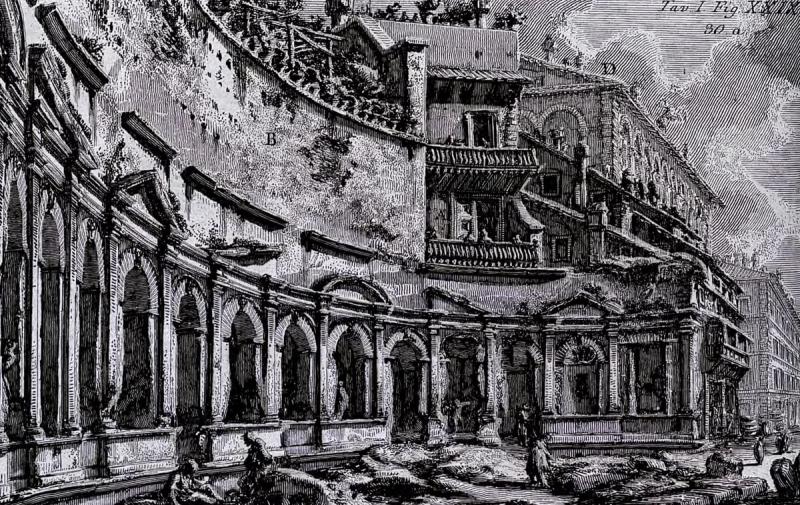
Needless to say, the colonial imaginary disregarded and dismissed the presence of significant native populations in both deserts. The fulfillment of these latter-day colonialist dreams came, of course, at their expense. Along the desert boundary that connected the archaeological sites of Leptis Magna, Sabratha, and the Arch of Marcus Aurelius in the center of Tripoli, the Italian nationalist discourse of the 1930s aspired to tie the Roman ruins, proof of the great ancient civilization, to the grand expectations of a future hegemonic Fascist empire. Archaeological investigations conducted by the Italians before and after their conquest had not only uncovered monuments, but also fossilized seeds and land-use infrastructure from Roman times such as canals and aqueducts, all of which were celebrated as a manifestation of ancient Roman agricultural expertise.
Before David Ben-Gurion invoked it in the 1950s, Benito Mussolini used the biblical metaphor of “making the desert bloom” to imagine the Fascist revitalization of Libya, which until then had been mocked as a “great bowl of dust.” Fascism envisioned a new ecology for the Libyan desert based on an agrarian revolution, where the hunter’s spear, seeking the odd rat or lizard, would give away to the plough of the settler. After the 1938 state-driven mass migration of twenty thousand Italian settlers, the so-called Ventimila, governor-general Italo Balbo’s fanterie rurali, or “rural infantry,” built new villages, houses, roads, and aqueducts. These squads of workers, who were depicted with a spade in one hand and a gun in the other, became the emblem of the Fascist settler. The Libyan desert had to be transformed into the new “granary of Rome,” producing high living standards through the use of ecology and architecture. In 1940, a special issue of the popular magazine L’Illustrazione Italiana was published as a way to celebrate Libya as a new destination for a bourgeoisie eager to escape their urban cage. One of the magazine’s reporters praised the way in which the tourist industry had begun to counter “romantic” expectations of wilderness and savage nature by promoting how the colony in fact offered a comfortable experience in keeping with metropolitan Italy:
The butter is always here in little rolls, the milk is fresh, the salad is crispy and slowly we learn that cows just arrived from Tripoli on a lorry, and that the salad represents the victory of modernism over barbarity, the victory of the water taken from the artesian well over millenary sands.
A few years later, the Zionists similarly sought to establish agricultural settlements and awaken the desert from an imagined millenary “emptiness”: Israel’s nation-building project combined the myth of “back to the land” after centuries of exile with the slogan of “turning the desert green,” an agenda that have been pursued by the Jewish National Fund since 1901 through planting trees, ferrying water, and developing settlements all over historic Palestine.
The settling of the Naqab and the Arabah started long before the establishment of the state of Israel in 1948. Prior the partition of Palestine, eleven “points” of Jewish settlement were established overnight in October 1946 in order to assure the inclusion of this area in the future Jewish state; later, the Israeli Defense Forces (IDF) completed the occupation of southern Palestine. The conquest of the desert between 1948 and 1949 was undertaken by the Nahal, an IDF program instituted by Ben-Gurion, which similarly to Balbo’s fanterie rurali combined military service and the establishment of agricultural settlements, fighting and farming. Under the supervision of Nahal officers, enlisted men worked in farms, paved roads, and planted eucalyptus trees, acacia, and jujube while the road to the Red Sea was being laid down.
While ideology and agricultural expansion have been historically considered the common ground shared by both colonial models, I recently uncovered a story that revolves around a different intersection of these two colonial worlds, and a character who in fact moved between them. Creating the basis for a literal juxtaposition of colonial geographies between Libya and Palestine, this story unveils a material relation existing between the Libyan Sahara and the Naqab.
I learned about this history when I was conducting interviews, both in Italy and in Palestine/Israel, during research on the Jewish Italian architect Umberto Di Segni who—together with the better known Florestano Di Fausto is considered to be the most prominent representative of modernist, and in fact Fascist, architecture in Libya. After the war, Di Segni emigrated to the newly established state of Israel. While trying to track—with little success—the traces of Di Segni’s architecture in Tel Aviv and Netanya, I met Jack Arbib, a Jewish Italian-Libyan writer who documented Di Segni’s life across Libya and Israel.
In our conversation, Arbib incidentally mentioned his uncle Pio Nahum, another Italian-Libyan Jew who emigrated to Israel after 1948. His is a story of migration and colonization—narrated by the material history of ruined war materiel strewn across the desert. It is also a story that connects the two distant deserts, and could be read as a mythical, biblical fable and a conjunction of two colonial histories.
Complementing Arbib’s memories, Guido Nahum, the youngest son of Pio, shared more anecdotes from his family history. This story could not have been written without both their testimonies.
Pio Nahum’s family story is a typical tale of an elite Jewish family in Fascist-ruled Libya before and after the Racial Laws of 1938. While Ze’ev Jabotinsky’s revisionist Zionism embraced Fascism in its early phase, the everyday life of Italian and Libyan Jews in the colony went through different stages. Clearly seen by the Italian authorities as the interface, and thus mediators, with the Arab “primitives”, Jews played a crucial role in colonial affairs until 1938. In fact, Guido’s story began by recalling the career of his grandfather, Aidan, who was a colonel in the Italian army between 1930 and 1934. More importantly, he was the personal interpreter of the governor of Cyrenaica, the notorious Marshal Rodolfo Graziani—later infamously known as “the butcher of Ethiopia” for his use of poison gas and other means to massacre the Ethiopian population under Italian occupation.
Despite the Fascist regime’s recognition of Jews as the economic engine in Tripoli and Benghazi and as loyal to the ideology, the racial manifesto of 1938, drawn up largely under German influence but enthusiastically embraced by Mussolini, broke the illusion of integration and forced Jews to leave all public positions. But as his private correspondence with Mussolini reveals, Italo Balbo, recognizing the strategic economic position of Jews in Libya, played a key role in trying to defend their communities in the colony. While they lost all political influence, they managed to safeguard many of their financial interests. This may explain how the Nahum family survived the war, and even retained some of its economic status in postwar Libya. Interestingly, in our conversation, despite reflecting on the harshness of being a Jew in occupied Libya under the racial laws, Guido looked back nostalgically on those days in Benghazi before and after 1945, when his father made his fortune.
He told me about one Mr. Ziegler, whose name betrayed a different provenance—“a distinguished man in his late 50s, with aristocratic manners and fluency in French, a somewhat strange figure in postwar Libya.” The unusual presence of this man in Benghazi in the aftermath of the World War II had been a mystery for Guido for years. Ziegler lodged in their house for weeks as a guest of his father. Guido remembers that the man “played every evening with the children and paid generous compliments to Mrs. Nahum for her cooking skills.” But he never exchanged a word with his father in public or in front of the family, as if they did not have anything to speak about. A few years after the formation of Israel, when the Nahum family immigrated there, the identity of Ziegler was revealed: he was a member of the Jewish Agency who had come to Libya to convince Pio to move his assets from Libya to the newly created state and invest his capital there.
The story of Nahum’s fortune is in fact a story of waste, and in two senses: the waste of war, here to be found in the “wastelands” of the desert. Our notion of waste is defined both spatiotemporally—waste is matter considered to be “out of time” and “out of place”, doomed to dispersion or perdition—and territorially, best exemplified by the desert, which functions as a topos reflecting the threshold of rationality and the dead end of human projects. Both conditions are marked by abandonment, uselessness, and unproductiveness.
Yet it was precisely junk in the desert that was the source of Nahum’s fortune. After Rommel’s army was defeated at El Alamein by Montgomery’s troops in 1942, the Libyan desert was left scattered with the residue of war: among the many abandoned bodies of dead soldiers, there were hundreds of truck and tank carcasses, an excellent source of iron. The British authorities asked for bids to clean the desert of all its waste, and Pio Nahum won the contract. This junk soon became a truly profitable business: iron and steel were in dire need to feed the blast furnaces of European factories, the new industry of global peace. He was turning waste into gold.
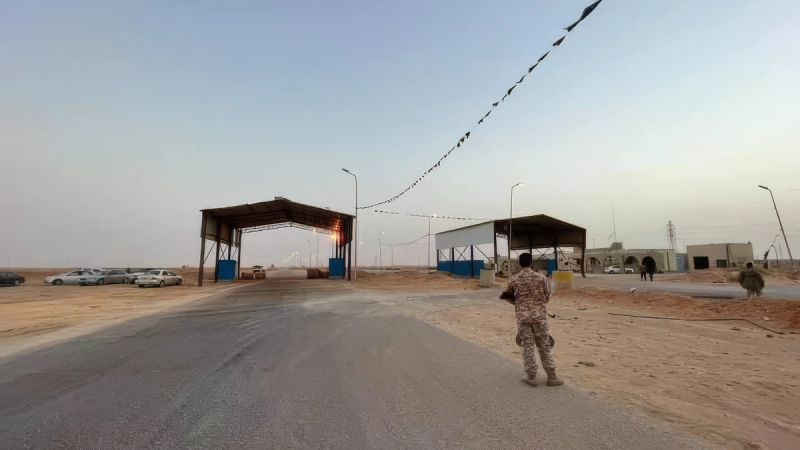
But Nahum’s workers and diggers, screening the Libyan Sahara for war residue, also found a surprising form of waste: dozens of abandoned trucks that they could easily repair and return to use. Many were abandoned by German and Italian soldiers in an attempt to escape the lethal strikes of the British Spitfires. In 1942, these planes were targeting convoys along the Litoranea, the east-west coastal highway—built by Mussolini in 1937 at the time of Italian occupation—that followed the edge of the desert. Many of the trucks still had gas in their tanks. After being recovered and repaired, the trucks were put back into service in the regions of Cyrenaica and Tripolitania. Nahum quickly became the most successful entrepreneur in postwar Libya. On this basis, a secret cooperation between Nahum, Ziegler, and the Jewish Agency began to develop. But the rumors of a Libyan Jew supporting the Zionist cause in Palestine prompted Libyan nationalists to put a bounty on his head. In 1946 Nahum and Ziegler agreed that there was no more time to lose, and things unfolded rapidly thereafter. Nahum stayed in Libya to organize a secret transfer of his operations, while his family temporarily found refuge in Italy. He wanted, of course, to take his wealth with him. He split his fleet in two: half the trucks were sent on boats through the Mediterranean port of Benghazi, and from there to the port of Haifa, at the time still under the British Mandate. The other half was sent through the desert. There, a group of Libyan Jews who were experienced desert drivers were given the mission of smuggling the trucks through Egypt and into Palestine through the Sinai and the Naqab. Between 1946 and 1947, seventy trucks entered Palestine illegally.
According to Guido Nahum’s memories, his father’s migration clearly echoes a sense of biblical wandering, where the desert acts as the theater where Zionist ideology could find its completion. But as this story shows, the wandering is not representative of a human drama only; it also relates to a furious circulation of iron, steel, and war refuse from Libya to Palestine at a time of shifting ideologies and massive political transformations. Interestingly, in Guido Nahum’s recollection, this movement and trade of metals, engines, and wheels actually started in Italy, before World War II reached North Africa. In order to understand deeply the interconnections between Fascist Italy and its peripheral colonial world, let us trace the metal back through history to see how it got to the desert in the first place, before it made Nahum a fortune.
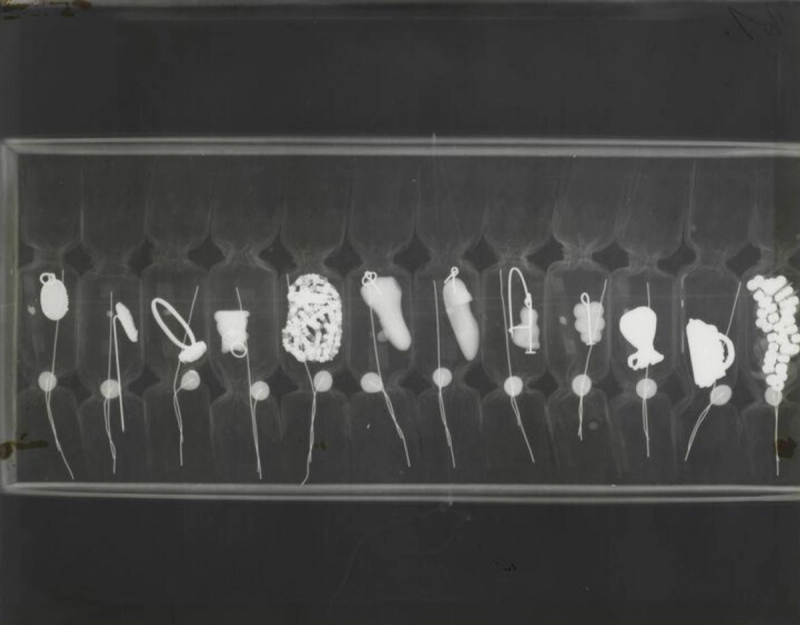
“Oro alla patria!” or “Gold to the fatherland!”—the slogan that accompanied the 1935 colonization of Ethiopia (after Eritrea, Somalia, and Libya) and Italy’s imperial ambitions—supported Mussolini’s vision of an autarkic economic regime. Even as it was on its way to Addis Ababa, the Fascist state organized a mass parade in the streets of Rome to gather funds for Italy’s war efforts and colonial plans: crowds of Italian women swarmed Piazza Venezia in Rome to donate their golden wedding rings to the fatherland. In return, they received steel rings to symbolize the union with the nation. But the national collection of gold was not enough. The regime also called upon its citizens to donate iron and other metals to support the war industry: copper pots from family kitchens, metal fences from farms, and bronze bells from churches were all used to produce cannons, vehicles, and armament. In the Fascist imaginary, the colonial lands became the theater in which the union between metals and men could be staged as a way to celebrate the military, economic, and spiritual power of the nation. Through autarky, propaganda, colonialism, and war, metal eventually became synonymous with politics.
It was Fiat who first began to employ these donated metals, using them to manufacture cylinder heads for cars and trucks to support the war and the colonial enterprise. The Fiat 626 truck, which was ideal for desert routes, became the most popular vehicle in Libya and Ethiopia for both civilian and military purposes. There they ran and there they died after being abandoned by soldiers retreating in 1942. At this point, it might have seemed that the “Fascist metal” had completed its life cycle, starting in the furnaces of Fiat’s factory in Turin and ending in the Libyan desert.
But in the hands of Pio Nahum, heterodox desert archaeologist and entrepreneur, this war waste was to find a second life: the metal, the components, and the trucks were all revived, inspiring a new nexus between North Africa and the Middle East. Indeed, through a visionary union of colonial landscapes, Nahum’s transit from one desert to another broke the temporal and spatial distance between two alien colonial worlds: one that had just passed and another that was about to come into being.
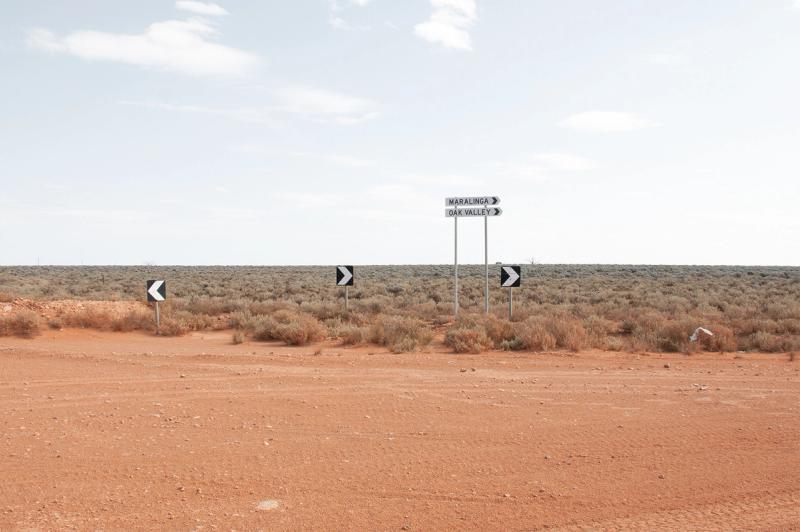
After the creation of the state of Israel in 1948, Nahum founded Titanic—the first Israeli transportation company to run on the Tel Aviv–Eilat line, which connected the metropolis at the center of the country to the Red Sea in the south. By the early 1950s, Titanic had become the preeminent civilian transportation company for crossing the Naqab and the Arabah deserts. Thanks to the experience of their Libyan drivers, who had expertise in navigating desert routes, mule tracks, and border roads, the trucks traversed Scorpion’s Ascent, an old Roman desert road connecting the Naqab to the Arabah. Nahum’s convoys comprised a line of six trucks with armed guards and two military jeeps, one at the front and the other at the back, so as to safeguard them against possible attacks from Palestinian fighters along the border with Jordan.
While serving various purposes (transport of mail, goods, cement and timbers for the new settlements in the desert), Titanic worked closely with the Israeli Ministry of Defense, backing the Engineering Corps in their renovation of the old, crumbling Roman, Ottoman, and British desert roads. It was the first company to bring Jewish settlers to the shores of the Red Sea, where the city of Eilat was founded in 1951.
Driven by entrepreneurship, ideology, and the capitalist spirit, Nahum’s journey contributes to a redefinition of the image of the wanderer in desert spaces. Representations of deserts typically refer to theology and the prophets of the monotheistic religions to explain the sense of bewilderment caused by the act of wandering—“the wilderness was where Moses had wandered with his people for forty years, and where they had nearly abandoned their God to worship a golden idol,” says environmental historian William Cronon. Against this image, the wanderer of Nahum’s story, who has lost his place in the world, meets the settler and embraces an ideology of expansion. Here, deserts evolve from being a “primitive” and “worthless” place into a laboratory for building a nation-state. From transport to cultivation, deserts must be “redeemed” by the settler’s labor and technology. In both Fascist and Zionist discourses, such “redemption” was justified as the reaction against the Arab presence, which has been marked as the cause of disorder and neglect. “Making the desert bloom” was a slogan of civilization, one that refused the passive contemplation of wild nature and instead imposed order on a “chaotic” landscape, on “wasteland.”
Titanic did not survive long as a company. By 1961, it had gone out of business. Presumably, this was partly connected to the prolonged drought that hit vast areas of the Naqab between 1956 and 1962, forcing settlers, agricultural enterprises and other ventures to retreat from the region. But in Guido Nahum’s memory, the closure of the business was mainly the result of growing competition in the transportation sector and the high maintenance costs involved in sustaining the old Titanic fleet, which was severely damaged over the course of many difficult trips across the desert. With time, and the refusal of the Israeli government to support Titanic financially to replace the vehicles’ broken parts, the fleet fell into disrepair. Unlike other local companies that could rely on brand new vehicles, Titanic’s old trucks were of course of Italian origin and spare parts for them could only be imported.
Following the trajectory of the Fiat trucks from Italy to Palestine, the line drawn in the various deserts by Nahum indicates how this story cannot be simply reduced to a biography, as it adds an important epistemological aspect to the writing of history in the context of global colonialism. In this scenario, Nahum’s story shifts the focus to the intersection of two settler-colonial worlds, where wandering sets the stage for settler-colonialism. The settler—embodying the passage from nomadism to civilization—eventually comes to inhabit a modern grid of infrastructure and agriculture that facilitate future migration, trade, and nation building. But in both Libya and Palestine, “making the desert bloom” required lands emptied to make room for new civilizations. This came with a heavy human cost to the indigenous populations. In this sense, the Bedouin Nakba—when the Israeli military expelled almost 90 percent of the hundred thousand Bedouins of the Naqab to the West Bank, Gaza, Jordan, and Egypt between 1948 and 1953—seems to echo the so-called military “pacification” of Libya. Conducted by the Italian army between 1923 and 1932 in Cyrenaica against the indigenous rebellion led by Omar al-Mukhtar, this campaign led to the ethnic cleansing of half of the population of Cyrenaica in order to clear space for Italian settlers. Importantly, ethnic cleansing is an ongoing reality in the Naqab. Thousands of Bedouins are still facing house demolitions, displacement, and resettlement in permanent towns to facilitate the Israeli state plan to domesticate the desert and reclaim it for their own settlements.
From occupied Libya to Palestine, Guido Nahum’s memories and tales about the vicissitudes of his family clearly echo those of a biblical story, where the desert can represent both the beginning of and the end of exile. But these stories also situate us in the present, showing how in the colonialist epic, the desert—once traces of what existed before have been erased—can be made to perform as tabula rasa, as terra nullius, a place that offers, to quote David Ben-Gurion, “the greatest opportunity to accomplish everything from the very beginning.