Margot Gayle & the Friends of Cast Iron Architecture
People
"Good Buildings Have Friends" is the title of a book currently in progress, namely a transatlantic collective biography of four women who shaped historic preservation in Britain and America across the mid-to-late twentieth century: Margot Gayle, Joan Maynard, Elizabeth Young, and Billa Harrod. Working outside the male-dominated institutions of architecture, planning, and academic history, each built her own organization (a society of friends) to make the case that particular buildings, materials, and neighbourhoods mattered, and to mobilise the public support needed to save them.
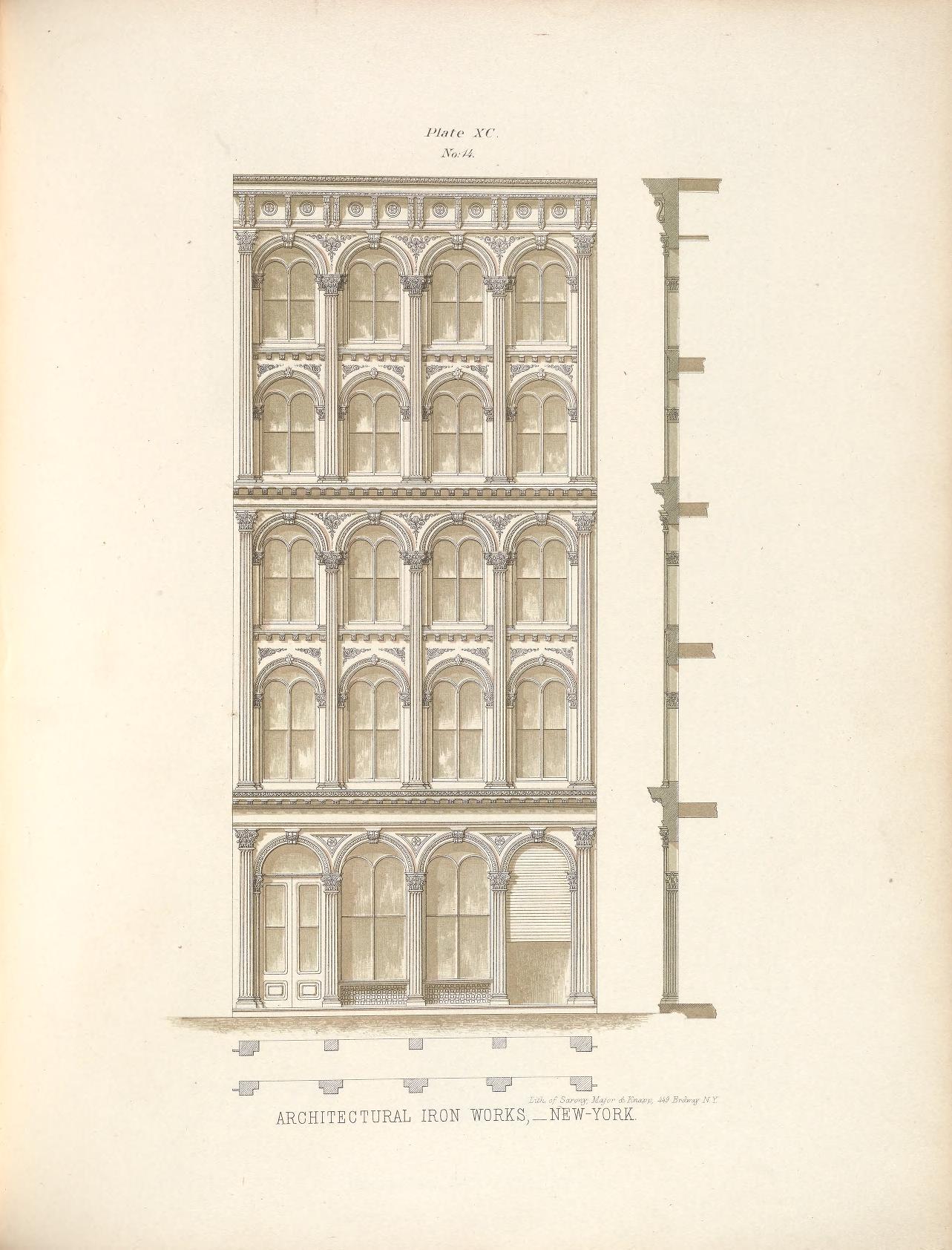
The first chapter focuses on Margot Gayle (1908–2008) and the Friends of Cast Iron Architecture, which she founded from her New York kitchen in 1970. Cast iron had transformed nineteenth-century American cities. Pioneered commercially by the inventor James Bogardus, whose Laing Stores (1849) was among the earliest buildings in the United States built with a full cast-iron façade, and mass-produced from catalogues by foundries such as Daniel D. Badger's Architectural Iron Works, it allowed merchants to buy the ornamental grandeur of stone architecture at industrial speed and cost. A former scientist and radio broadcaster turned civic activist, Gayle built a public constituency for a material few had yet thought to defend, using pocket magnets, walking tours, membership pins, and a network of correspondents that stretched from SoHo to Savannah to Rio de Janeiro, all in the spirit of her own membership slips: "I'm a friend of cast iron — let me know what I can do."
Her campaigns helped secure the landmark designation of the SoHo–Cast Iron Historic District in 1973, permanently protecting the largest concentration of nineteenth-century cast-iron architecture in the world. Excluded from the institutions that might otherwise have channelled her expertise, Gayle instead built her own, a pattern the book traces across all four protagonists, and a reminder of how much of what we now take for granted as protected heritage was secured not by official power, but by those who had to invent their own.